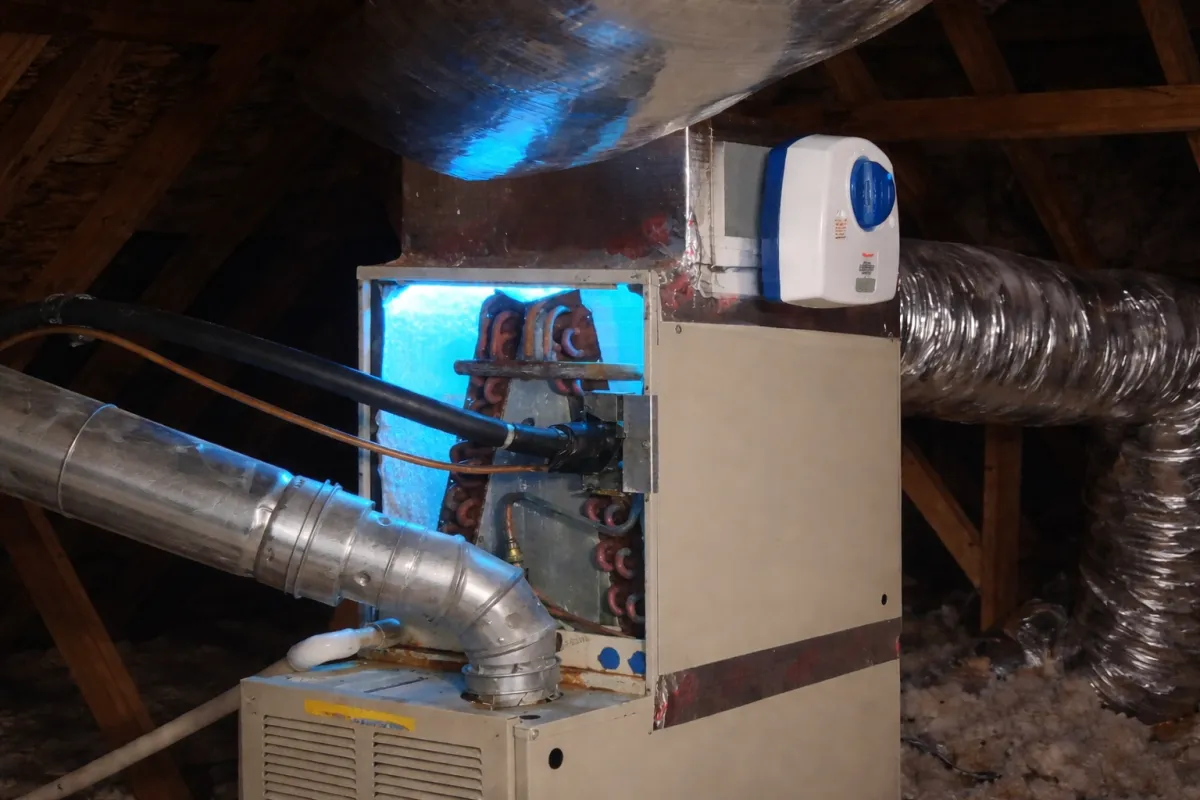
Do UV Lights Really Kill Mold in Your HVAC System?
The straight answer — and what your ductwork isn't telling you.
Let’s be honest: your HVAC system sees a lot. Every day it quietly circulates air through your home, past coils that get cold and wet, through dark ductwork that never sees sunlight, and straight into the perfect conditions mold loves.
So when someone says, “Just install a UV light and you’re good,” it’s worth asking:
Is that actually true — or is it the HVAC version of putting an air freshener over a trash can?
The short answer: UV lights work — but only when used correctly.
Let’s break it down.
Why Mold Grows in HVAC Systems (Especially in Memphis & Jackson)
Mold needs three things:
Moisture
Organic material
Darkness
Your HVAC system delivers all three.
The evaporator coil removes humidity from the air — which means it stays damp. Add in dust, skin cells, and organic debris, and you’ve basically built a five-star hotel for mold spores.
In Memphis, TN, where summer humidity can feel like walking through warm soup, this is not theoretical.
The same applies in Jackson and throughout West Tennessee.
High humidity + older duct systems + crawlspaces = elevated mold risk.
What HVAC UV Lights Actually Do
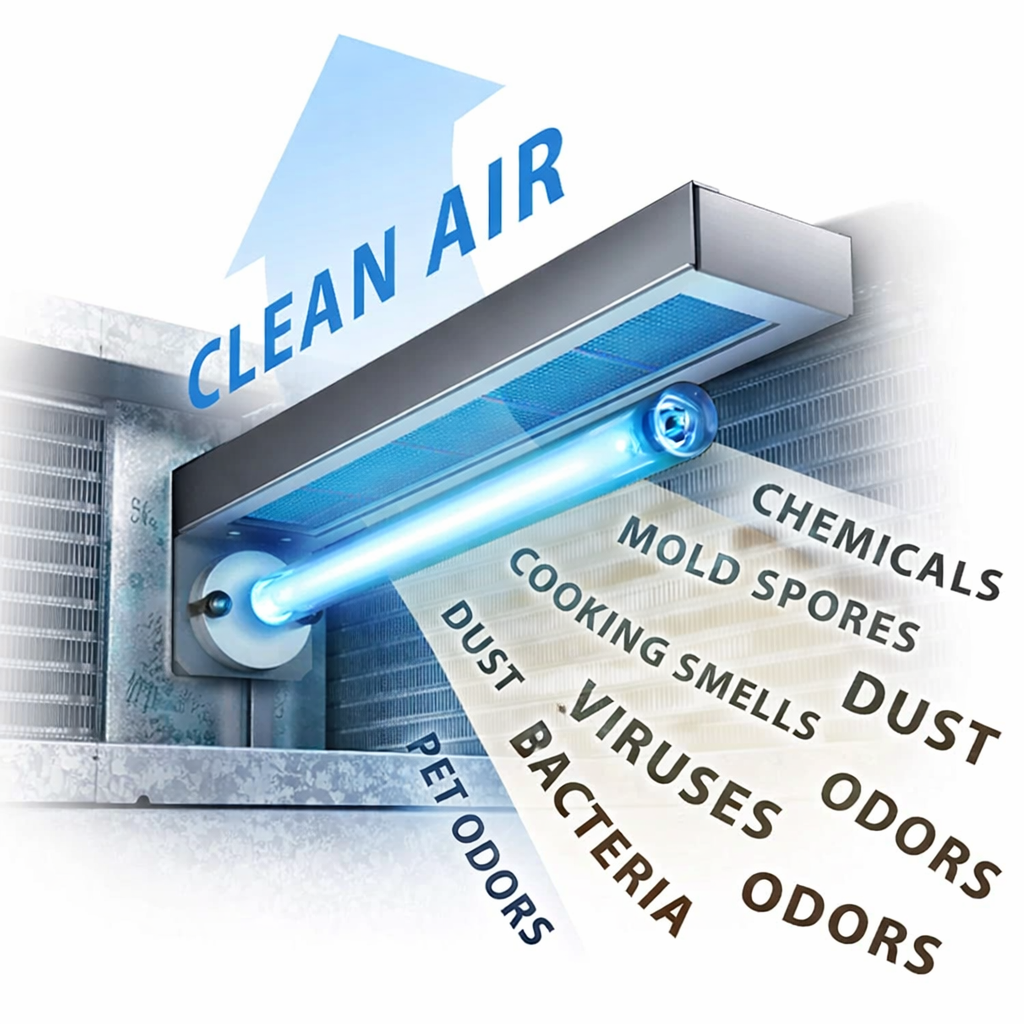
UV-C germicidal lights disrupt the DNA of microorganisms like:
Mold
Bacteria
Viruses
When exposed to enough UV-C radiation, mold spores can’t reproduce.
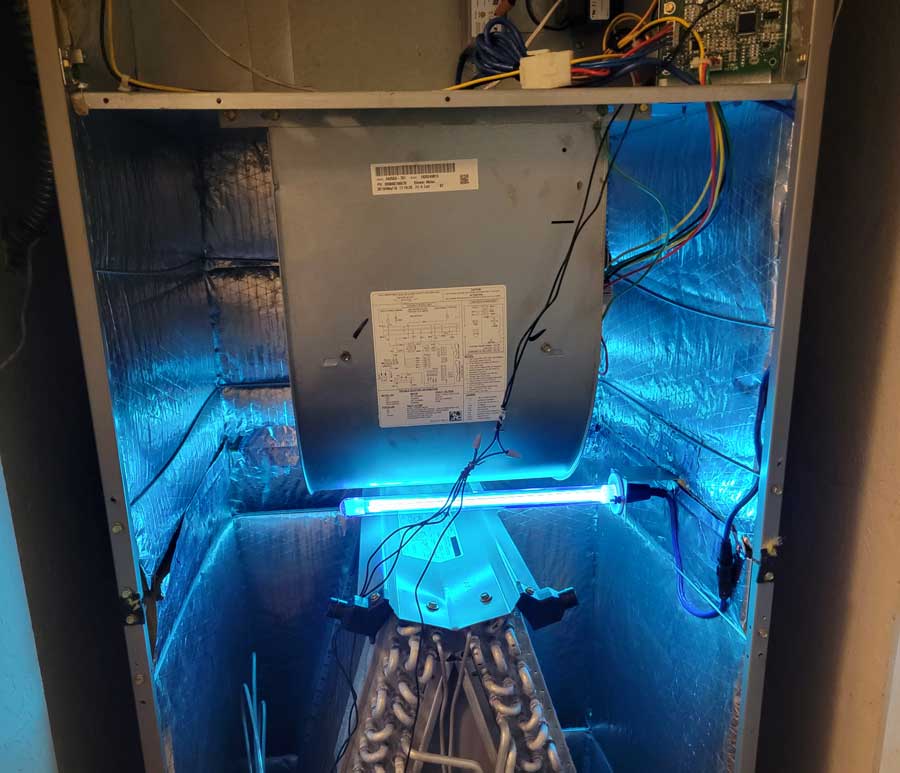
Installed properly near the evaporator coil, UV lights:
✔ Sterilize coil surfaces
✔ Prevent mold colonies from forming
✔ Reduce microbial growth
✔ Help eliminate musty odors
There are also air-stream UV systems placed in return ducts that treat airborne contaminants as they pass through.
When installed correctly, UV lighting is a preventative maintenance tool — not a gimmick.
What UV Lights Cannot Do
This is the part people skip.
UV lights are NOT remediation tools.
If mold is already growing in:
Ductwork
Coils
Air handler cabinets
A UV light will not remove it.
It also won’t:
Remove dust buildup
Eliminate debris
Clean clogged coils
Fix airflow issues
And UV light only works where it shines. HVAC systems have shadows and hidden surfaces.
If your system hasn’t been cleaned in years, installing UV alone is like buying a security system after the burglary.
The Correct Order of Operations for IAQ in Tennessee
If you want real indoor air quality improvement:
1️⃣ Professional Duct Cleaning
Removes organic debris mold feeds on.
2️⃣ Address Existing Mold
Treat and remove contamination before adding UV.
3️⃣ Install UV Light as a Maintenance Layer
Prevents future growth once the system is clean.
This layered approach is especially important in humid regions like Memphis and Jackson.
Are UV Lights Worth It in the Mid-South?
For homeowners in humid climates like Memphis and Jackson — yes, with caveats.
They are:
✔ Low maintenance
✔ Energy efficient
✔ Effective at preventing microbial growth
✔ Helpful for odor control
But only when:
Installed properly
Coil is accessible
System is clean
Filters are changed regularly
Ready to Improve Your Indoor Air Quality?
We specialize in:
Anitmicrobial Treatments
Serving Memphis, Jackson, and surrounding communities.
Because clean air isn’t a luxury — it’s just good sense.
📦 FAQ Section
Frequently Asked Questions
Do UV lights kill existing mold in ductwork?
No. UV lights prevent mold growth but do not remove existing contamination. Duct cleaning is required first.
Are UV lights safe inside HVAC systems?
Yes. When installed correctly inside the air handler, UV-C lights are enclosed and safe for residential use.
How long do HVAC UV lights last?
Most bulbs need replacement every 9–12 months to remain effective.
Do UV lights help with allergies?
They can reduce airborne microbial contaminants, which may improve symptoms in sensitive individuals.
